Beginner Podcast Setup Guide: Start Your Podcast the Easy Way

Updated: Jan 27
Podcasting has exploded in popularity, becoming one of the most effective ways to share your voice, build an audience, and promote a brand. If you're new to the space and overwhelmed by where to begin, this beginner podcast setup guide is here to help. Whether you're wondering how to start a podcast for free or just want the best podcast equipment for beginners, this step-by-step guide will simplify your podcast creation journey. Let’s explore how you can start recording, publishing, and growing your podcast the easy way.

Why Starting a Podcast in 2024 Is a Smart Move
Podcasting is more than a trend; it's a growing industry offering real opportunities to connect with audiences. With over 5 million podcasts worldwide and tens of millions of listeners, diving in now gives you the chance to establish your presence before the market becomes even more saturated. Plus, tools for podcast creation have become more accessible than ever, thanks to free podcast hosting platforms and affordable podcast equipment.
Beginner Podcast Setup Essentials
Setting up your podcast doesn’t need to be technical or expensive. Here's what you need to get started.
1. Choose a Topic and Format
Every great podcast begins with a strong idea. Choose a niche you are passionate about and have knowledge in. Then decide your format:
Interview-style
Solo commentary
Co-hosted conversations
Narrative storytelling
Keep your audience in mind; your delivery style and structure should serve their needs and preferences.
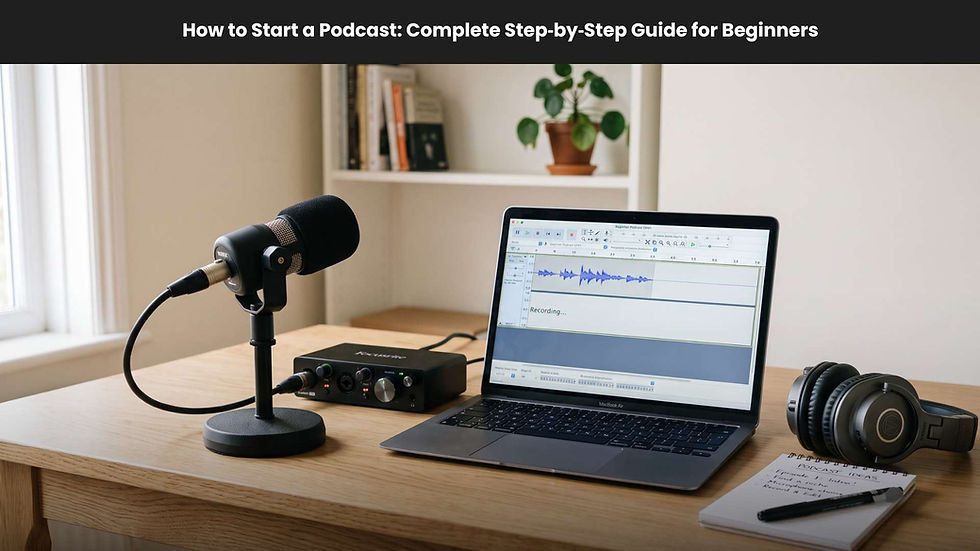
2. Select Podcast Equipment for Beginners
You don’t need a professional studio to begin. Here's a simple podcast equipment list:
Microphone: USB mics like the Samson Q2U or Blue Yeti are budget-friendly and offer good sound quality.
Headphones: Closed-back headphones such as Audio-Technica ATH-M20x help avoid echo issues.
Recording software: Audacity (free) or GarageBand for Mac users.
Want more options? Check out this complete guide to podcast equipment for every budget in 2024 to find gear that fits your needs and wallet.
This setup is ideal for anyone searching for the best podcast equipment for beginners on a limited budget.
3. Setup Recording Space
A quiet, small-sized room with soft furnishings (like curtains and carpets) reduces echo and background noise. You can also use foam panels or blankets to create a basic sound booth at home.
How to Record a Podcast
Once your equipment and space are ready, it's time to hit record.
1. Pick Recording Software
Free options like Audacity (Windows/Mac) or GarageBand (Mac-only) make it easy to record and edit your audio.
2. Plan Your First Episode
Write a loose script or bullet points to stay organized. Introduce yourself, explain the podcast’s purpose, and keep the episode concise and engaging—ideally under 20 minutes for starters.
3. Edit and Export
After recording:
Remove background noise
Edit out long pauses, filler words (um, uh)
Normalize audio levels
Export your episode to MP3 format with appropriate metadata (title, description, cover art).
How to Launch Your Podcast the Easy Way
You’ve got your first episode, now let’s distribute it.
1. Choose an Affordable Podcast Hosting Platform
Some free podcast hosting services to start with include:
Buzzsprout (Free Plan)
Podbean
Anchor (Now Spotify for Podcasters)
They manage your podcast RSS feed and distribute episodes to platforms like Apple Podcasts, Spotify, and Google Podcasts.
2. Submit to Major Podcast Directories
Ensure your podcast is available on top podcast platforms:
Apple Podcasts
Spotify
Google Podcasts
Amazon Music
Stitcher
This boosts your reach and makes it easier for listeners to find and follow your show.
3. Promote Before You Launch
Create teaser trailers and short clips on social media
Share show art and launch date with family and friends
Join podcasting communities on Reddit or Facebook
Pre-launch buzz builds anticipation and improves early downloads.

How to Grow a Podcast Audience from Scratch
Launching is step one; growing and retaining an audience is ongoing.
1. Use Podcast SEO Strategies for Beginners
Just like blogs, podcasts can be discovered through search engines. To benefit from podcast SEO:
Include keywords like "beginner podcast setup" and "how to start a podcast for free" in episode titles and descriptions
Add episode transcripts to your website
Use tags strategically in your podcast hosting platform
2. Share Across Social Media and Online Communities
Post short audio snippets on:
Instagram Reels
TikTok
LinkedIn (if your niche is professional)
Repurposing podcast clips for LinkedIn is gaining momentum, especially with the rise of LinkedIn’s short-form video feature, which could become the next big trend in creator marketing.
Create value-oriented content that drives users to your latest episodes.
3. Collaborate with Other Podcasters
Appear on other beginner or mid-size shows in your niche. Cross-promotion exposes you to new audiences and builds credibility in your domain.
4. Encourage Listener Engagement
Call-to-actions in your podcast can include:
Leaving reviews
Following or subscribing
Sharing episodes with friends
More interactions lead to algorithm boosts on Spotify and Apple Podcasts.
5. Analyze and Improve
Use podcast analytics tools from Apple, Spotify, or your hosting service to track:
Listener demographics
Episode drop-off points
Most popular topics
Use this information to improve content and delivery.
Frequently Asked Questions About Starting a Podcast
What is the best way to launch a podcast?
Start with high-quality audio, a clear niche, and at least 3 episodes to binge on during launch. Promote your launch across social channels and email lists. Use affordable hosting and distribute on major platforms right from day one.
How can you promote a podcast with no audience?
Leverage free strategies like SEO-driven blog posts, Reddit engagement, social groups, and guest interviews to tap into existing audiences. Consistency and value-based content are crucial.
What tools do I need to start podcasting?
At minimum: a good microphone, headphones, free editing software, and a podcast host to upload episodes. Optional upgrades include audio interfaces or mixers as your skills improve.
Is SEO important for podcasts?
Yes. Optimizing titles, show notes, and metadata with keywords helps new listeners find your episodes through Google and podcast directories. Transcripts and blog posts further amplify search visibility.
How much does it cost to run a podcast?
You can start a podcast for under $100:
Microphone: $60–$100
Hosting: Free to $20/month
Recording/Editing Software: Free options available
Over time, you can invest more into gear or paid marketing.
Conclusion:
As you can see, your beginner podcast setup doesn't need to be complex or expensive. With the right equipment, a clear message, and smart promotional tactics like podcast SEO and social sharing, you can launch and grow an engaging show from scratch. Use this guide to take the first step toward voice-based marketing and build a future-proof platform. Whether it's your first episode or your fiftieth, remember: consistency, clarity, and content value are your biggest assets on the journey to podcast success.
If you're looking to turn your voice into a long-term platform and need help with how to grow a podcast audience from scratch, we create done-for-you systems designed to make that journey easier and more effective.