How to Start a Podcast: Step-by-Step Podcasting Guide for Beginners


Learning how to start a podcast is one of the best ways to build an audience, grow your personal brand, and share ideas that matter. This guide walks you through every practical step you need to launch a successful show, even if you’ve never recorded audio before. Whether you want to create an interview series, a passion project, or a community-driven broadcast, you’ll get clear, actionable advice to launch confidently.
Why You Should Start a Podcast
Podcasting has grown into one of the most versatile and rewarding content formats available. The benefits go beyond creativity – podcasts build genuine relationships with audiences. You can educate, entertain, and inspire listeners while creating new revenue opportunities.
1. Authority and Leadership: Hosting a show positions you as a thought leader and trusted voice in your field.
2. Networking: Podcast interviews allow you to connect with guests, experts, and potential collaborators.
3. Lead Generation: Branded podcasts often convert listeners into loyal customers.
4. Monetization: With consistent effort, you can generate income through sponsorships, affiliate links, or merchandise.
According to recent research, over 460 million people tune in to podcasts globally, and those numbers continue to rise yearly – proof that it’s a strong medium for personal and business growth.
Step 1 – Plan Your Podcast
Before recording, map out your goals, target audience, and niche. Planning is essential for clarity and long-term growth.
Define Your Podcast Goals
Ask yourself what success means for you. Your goals might include sharing knowledge, building authority, promoting a brand, or generating income. Defining purpose ensures your podcast remains focused and consistent.
Identify Your Ideal Listener
Think carefully about who you’re speaking to. Build listener personas by noting demographics, challenges, and interests. A fitness trainer might target “busy professionals who want 20-minute home workouts,” while a marketer might speak to “entrepreneurs building social media presence.” Narrowing your audience helps find loyal followers.
Choose a Specific Niche
Successful podcasters go niche rather than broad. For example, instead of “health,” focus on “mental health for remote workers” or “nutrition for diabetics.” A specific topic helps you stand out and find the right listeners easily.
Step 2 – Name and Brand Your Podcast
Your podcast’s name should capture attention quickly and communicate its theme.
How to Choose a Podcast Name
Select something short, searchable, and memorable. Include relevant keywords without making it sound unnatural. For example, if your show covers startup marketing, a name like “The Growth Founders Podcast” tells people exactly what to expect.
Apple recommends clear and descriptive names under four words. Always check name availability on Spotify, Apple Podcasts, and social media platforms to avoid duplication.
Design Podcast Artwork
Podcast artwork creates your first impression. Use clean visuals, readable fonts, and bright colors. Ideal specifications include a 3000 x 3000 px square, under 500 KB, RGB color, and minimal text. For free tools, try Canva or Adobe Express.
Create an Intro and Outro
Open with a captivating hook explaining who you are and what your show is about. Add short background music that aligns with your theme. Keep outros simple with a call to action such as “Subscribe and leave a review.” Make sure you use only royalty-free or licensed music.
Step 3 – Choose a Podcast Format and Structure
There are multiple ways to structure your show. Common formats include:
Solo-host or monologue style
Co-hosted conversational podcast
Interview-based podcast
Narrative storytelling or documentary format
Consider your goal and comfort level. A solo show gives full creative control, while interviews bring more voices and insights. Structure matters too: begin with an intro, deliver your main story or discussion, then conclude with key takeaways or listener questions.
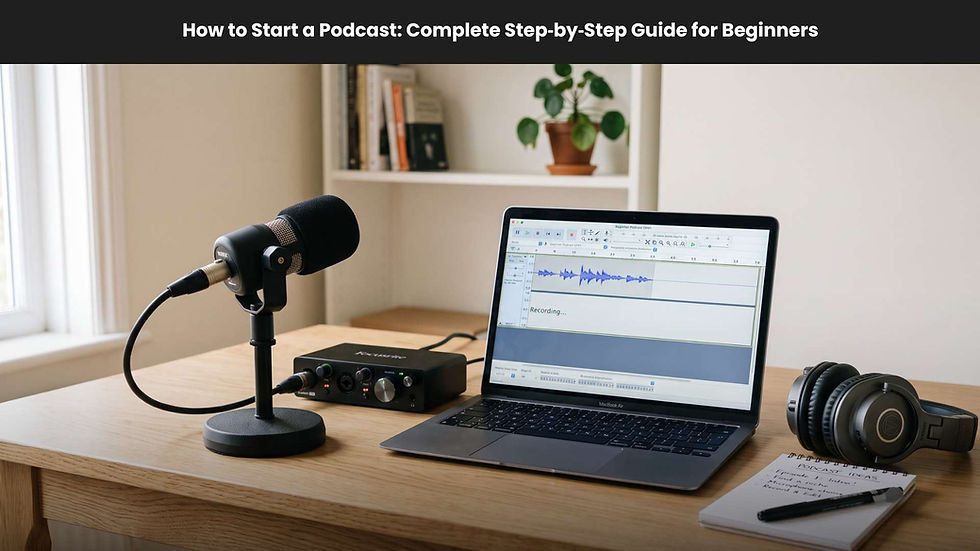
Step 4 – Set Up Your Podcast Equipment
You can start a podcast on any budget. The key is to work within your means and focus on sound clarity.
Beginner Setup
Equipment: Samson Q2U microphone, basic wired headphones, and a free recording tool like Audacity. Perfect for one-person podcasts.
Intermediate Setup
Equipment: Two Shure MV7 microphones, adjustable boom arms, pop filters, an audio interface like Focusrite Scarlett 2i2, and comfortable closed-back headphones.
Advanced Setup
Equipment: Rodecaster Pro mixer, two XLR microphones, soundproof foam panels, LED lighting, and studio-quality headphones. Excellent for multi-person shows.
Recording Environment Tips
Choose a quiet room with minimal echo. Add rugs, curtains, or foam panels to absorb sound. Position your mic 2–4 inches from your mouth at a 45-degree angle. Consistency matters more than cost when building good sound quality.
Step 5 – Select Recording and Editing Software
Recording and editing tools bring your podcast to life. For beginners, choose software that’s simple but high-quality.
Recommended Tools:
Riverside: Records local audio and video in studio-level quality.
Audacity: Free, open-source audio editor suitable for Windows and macOS.
Adobe Podcast: Enhances clarity and removes background noise automatically.
Descript: Text-based editor that lets you trim mistakes like editing a document.
Focus on apps that record separate tracks for hosts and guests, support 48 kHz audio, and integrate transcription tools for accessibility.
Step 6 – Craft a Podcast Script or Outline
Scripts help you stay focused while sounding authentic.
Break each episode into sections:
1. Hook (first 30 seconds)
2. Introduction (who you are, what this episode covers)
3. Core discussion or interview
4. Summary of main takeaways
5. Call to action
Always sound natural rather than reading word-for-word. Use your script as a flexible guide.
Step 7 – Record Your First Podcast Episode
Start recording once your setup is ready. Speak slowly, clearly, and conversationally. Practice smiling while talking, it improves tone. Always check audio levels before recording an entire episode.
For multiple speakers, record separate audio tracks. For remote guests, ensure everyone uses headphones and a reliable internet connection.
Step 8 – Edit Your Podcast Recording
Editing transforms raw audio into a professional-quality episode. Goals include clarity, pacing, and story flow.
Editing Checklist:
Remove pauses, filler words, and background noise.
Balance audio levels using compressors or auto-level functions.
Add intro and outro music.
Enhance sound using noise reduction and EQ filters.
Modern tools like Magic Mastering or Descript’s auto-leveling can make editing faster. Consider exporting audio as WAV for high quality or MP3 for smaller file sizes.
Step 9 – Choose a Podcast Hosting Platform
Podcast hosting stores and distributes your audio files. Choose a reliable platform that automatically creates an RSS feed for major listening apps.
Popular options:
Buzzsprout
Podbean
Spotify for creators
Libsyn
Transistor
Buzzsprout’s Cohost AI and Magic Mastering help automate editing, transcript creation, and ad insertion, making launch smoother. Once you upload, you can submit your RSS feed to directories like Apple Podcasts, Spotify, Amazon Music, and YouTube.
According to industry data, Spotify accounts for 34% of total podcast downloads, and Apple Podcasts for 32%. Publishing on both guarantees maximum exposure.

Step 10 – Promote and Market Your Podcast
Podcast promotion turns your work into a listenership. Use multiple channels to boost reach.
How to Promote Your Podcast
Create social clips using video snippets or soundbites.
Post consistently on social media and email newsletters.
Encourage reviews and ratings on Apple Podcasts.
Join podcast communities on Reddit, Facebook, or Discord.
Paid promotions can accelerate growth. For instance, Buzzsprout Ads cost around $200 and can reach up to 10,000 listeners per cycle. Overcast Ads may bring about 100 new subscribers each run.
Optimize for SEO
Transcripts improve accessibility and boost search rankings. Include keywords like “podcasting,” “start podcast,” and “how to start a podcast for beginners” in your show notes. Create a website or blog around your show to publish transcripts, episode summaries, and related articles, increasing organic visibility on Google.
Build a Community
Invite listeners to share feedback or join social groups related to your topic. Featuring audience questions or user stories builds engagement and loyalty.
Step 11 – Monetize Your Podcast
Once your audience grows, consider monetization.
1. Sponsorships and Ads: Reach out to brands that align with your niche.
2. Affiliate Marketing: Recommend products and earn commissions.
3. Listener Donations: Offer bonus episodes or behind-the-scenes content.
4. Merchandise: Sell branded items like mugs or shirts.
Dynamic Ad Insertion (DAI) technology allows you to run time-based campaigns across all episodes, increasing revenue flexibility. Even with a small audience, affiliate links or small sponsors can add incremental income.
Step 12 – Track and Improve Performance
Track download numbers, demographics, and listener retention using analytics dashboards in your hosting platform. Data shows that most successful podcasts release episodes every 8–14 days and average 20–40 minutes per episode. Use insights to fine-tune topics, length, and scheduling.
Continuous Improvement Tips
Ask for listener feedback.
Study competing shows for trends.
Refine audio quality and storytelling each season.
Podcasting is an iterative creative journey. Keep adapting and experimenting as your audience grows.
Conclusion
Starting a podcast is simpler than it appears. Now that you know how to start a podcast step-by-step, you can focus on refining your message, connecting with your audience, and enjoying the process. Begin with the right mindset, plan strategically, and commit to consistent publishing. Each episode builds your skills, audience, and authority. With a bit of patience, your digital broadcast can become a valuable long-term platform for expression, growth, and opportunity.